


Lakshadweep Sarees – A Complete Guide to the Textile Heritage
Introduction
Lakshadweep, India's smallest Union Territory, is an archipelago of beautiful coral islands in the Arabian Sea. The islands are known for their coconut groves, maritime culture, and traditional handicrafts rather than a distinct saree-weaving tradition. Due to its tropical climate and cultural customs, women have traditionally worn garments such as the Mundu, Kuppayam, and other modest attire. Today, sarees are widely worn during weddings, festivals, religious ceremonies, and official functions, often featuring lightweight fabrics suited to the island climate.
Famous Sarees
Although Lakshadweep does not have an indigenous traditional saree, the following styles are commonly worn:
1. Kerala Kasavu Saree
-
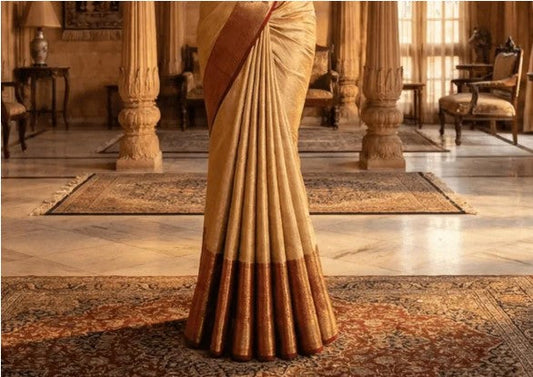
Cream or off-white cotton saree
-
Elegant gold zari border
-
Popular for weddings and festive occasions
2. Handloom Cotton Saree
-
Lightweight and breathable
-
Ideal for the humid coastal climate
-
Comfortable for everyday wear
3. Cotton-Silk Blend Saree
-
Soft and elegant
-
Suitable for celebrations and family functions
4. Printed Floral Saree
-
Inspired by tropical island flora
-
Bright and vibrant colours
-
Popular for casual and festive wear
History
Lakshadweep has historically maintained strong cultural and trade links with the Malabar Coast of Kerala. As a result, the islands adopted many aspects of Kerala's textile traditions, including the use of Kasavu sarees during ceremonial occasions. Traditional weaving was limited, with most textiles brought from Kerala and nearby coastal regions. Today, sarees remain an important part of modern ceremonial attire while preserving cultural connections with the mainland.
Origin Region
Traditional textiles used in Lakshadweep are primarily sourced from:
-
Kerala
-
Kochi
-
Kozhikode
-
Kannur
-
Balaramapuram
Within Lakshadweep, major inhabited islands include:
-
Kavaratti
-
Agatti
-
Andrott
-
Minicoy
-
Kalpeni
-
Amini
Fabric Used
-
Cotton
-
Handloom Cotton
-
Cotton-Silk Blend
-
Silk
-
Linen
-
Chiffon
-
Georgette
Weaving Technique
Most sarees worn in Lakshadweep are handwoven or machine-woven in Kerala and neighboring regions using techniques such as:
Traditional Handloom Weaving
Fine cotton fabrics woven on handlooms.
Zari Border Weaving
Gold zari borders used in Kasavu sarees.
Plain Weave
Simple, lightweight weave suitable for tropical climates.
Modern Power Loom Weaving
Used for affordable everyday sarees.
Traditional Motifs
Lakshadweep-inspired sarees often feature motifs inspired by island life, including:
-
Coconut palms
-
Waves
-
Seashells
-
Coral patterns
-
Fish
-
Floral vines
-
Tropical leaves
-
Geometric borders
-
Minimalist gold borders
-
Nature-inspired prints
Natural Dyes & Colors
Historically, natural dyes were obtained from plants and coastal vegetation.
Natural dye sources include:
-
Indigo – Blue
-
Turmeric – Yellow
-
Madder Root – Red
-
Coconut Husk – Brown
-
Leaves – Green
Popular saree colours include:
-
White
-
Cream
-
Sky Blue
-
Sea Green
-
Coral Pink
-
Turquoise
-
Yellow
-
Gold
-
Maroon
-
Navy Blue
Cultural Significance
Sarees are worn in Lakshadweep mainly during weddings, religious festivals, cultural events, and official ceremonies. The elegant Kasavu saree is especially popular due to the islands' close cultural ties with Kerala. Lightweight cotton sarees are preferred because they are comfortable in the warm and humid climate.
Festivals & Occasions
Lakshadweep sarees are commonly worn during:
-
Eid-ul-Fitr
-
Eid-ul-Adha
-
Milad-un-Nabi
-
Weddings
-
Family celebrations
-
Cultural festivals
-
Independence Day
-
Republic Day
-
School and official functions
-
Community gatherings
GI Tag Status
Current Status: Lakshadweep does not have a Geographical Indication (GI)-registered saree or a traditional indigenous saree-weaving industry. However, GI-tagged Kerala handloom products, especially Kasavu sarees, are widely used across the islands.
How to Identify an Authentic Lakshadweep-Style Saree
-
Lightweight cotton or cotton-silk fabric suitable for tropical weather.
-
Fine handloom weave with slight natural irregularities.
-
Elegant gold zari borders in Kasavu-style sarees.
-
Comfortable, breathable texture.
-
Purchase from certified handloom stores, Kerala government emporiums, or trusted retailers.
Care Instructions
-
Hand wash cotton sarees with mild detergent.
-
Dry clean silk and zari-bordered sarees.
-
Dry in shade to preserve colours.
-
Store wrapped in muslin or cotton cloth.
-
Avoid prolonged exposure to moisture.
-
Iron on low to medium heat.
-
Keep zari borders folded carefully to prevent damage.
Interesting Facts
-
Lakshadweep is India's smallest Union Territory, consisting of 36 coral islands, of which 10 are inhabited.
-
The islands share strong historical and cultural ties with Kerala, influencing local clothing and textile preferences.
-
Traditional attire for women includes the Mundu and Kuppayam, while sarees are primarily worn for ceremonial occasions.
-
The tropical climate makes lightweight cotton and handloom fabrics the preferred choice.
-
Most sarees worn in Lakshadweep are sourced from Kerala's renowned weaving centers.
-
The islands are famous for coir products, coconut-based handicrafts, and maritime traditions rather than textile weaving.
-
Modern fashion in Lakshadweep blends traditional coastal simplicity with elegant Indian handloom sarees.
Tags:
Previous
Kerala Sarees – A Complete Guide to the Rich Textile Heritage
Next
Ladakh Sarees – A Complete Guide to the Textile Heritage
Related articles
Jul 29 2026
A Saree as a Guru – Life Lesson
Jul 25 2026
Chapter 25 – The Science of Comfort l RESSA

Jul 25 2026
