


The Science of Pleats: How Saree Pleats Shape Comfort, Movement, and Elegance
When we admire a beautifully draped saree, our attention is often drawn to its fabric, colors, or intricate craftsmanship. Yet one of the most important elements of a saree is often overlooked—the pleats. Far more than a decorative feature, pleats are a brilliant example of functional design. They influence how a saree moves, fits, breahes, and flows with the body.
From a scientific perspective, saree pleats represent a perfect balance between structure and flexibility, allowing six yards of fabric to adapt effortlessly to human movement.
-
What Are Pleats?
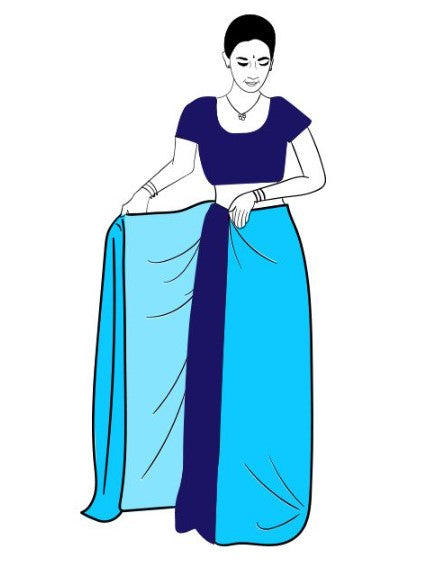
Pleats are folds of fabric arranged in a systematic pattern and tucked securely at the waist. They help organize a large amount of fabric into a compact structure while preserving freedom of movement.
Without pleats, a saree would be difficult to manage, less comfortable to wear, and far less elegant in motion.

-
The Engineering Behind Pleats
Think of pleats as nature-inspired expansion joints. Just as bridges and buildings use flexible joints to accommodate movement, pleats allow fabric to expand and contract according to the body's actions.
When a wearer:
-
Walks
-
Climbs stairs
-
Sits down
-
Turns around
the pleats adjust automatically, creating flexibility without losing shape.

This ability to adapt is one of the reasons sarees remain comfortable despite their length.
-
How Pleats Improve Mobility
One of the biggest challenges in garment design is balancing structure with movement.
Pleats solve this problem by creating a reserve of fabric that can open when needed and fold back into place afterward.
During walking:
-
Pleats spread slightly to allow the legs to move.
-
They contract after each step.
-
The fabric maintains a neat appearance.
This continuous expansion and contraction create the smooth, graceful movement associated with sarees.

The Physics of Pleat Movement
Pleats work through simple mechanical principles.
Flexibility
Each fold acts like a hinge, allowing controlled movement without stressing the fabric.
Energy Distribution
As the body moves, pleats distribute movement forces across multiple folds rather than concentrating them in one area.
Motion Control
Pleats absorb sudden movements and convert them into smoother fabric motion, reducing visual abruptness.
This is why sarees often appear fluid and elegant even during active movement.
-
Pleats and Weight Distribution
A saree contains a considerable amount of fabric. Pleats help manage this fabric efficiently by concentrating it into a structured arrangement.
Benefits include:
-
Better balance
-
Reduced fabric bulk
-
Improved comfort
-
Easier movement
By organizing fabric around the body's center, pleats contribute to overall stability and posture.

-
Air Circulation and Breathability
Pleats create small gaps between layers of fabric.
These spaces:
-
Allow air to circulate.
-
Improve ventilation.
-
Reduce heat buildup.
-
Enhance comfort in warm climates.
This hidden airflow system is one reason sarees remain suitable for India's tropical weather conditions.

-
The Visual Science of Elegance
Pleats influence how the eye perceives movement.
The vertical lines created by pleats:
-
Make the body appear taller.
-
Create visual symmetry.
-
Add rhythm to the silhouette.
-
Enhance the flow of the drape.
As the wearer walks, the movement of the pleats generates a gentle wave effect that contributes to the saree's graceful appearance.

-
Different Pleats, Different Effects
Narrow Pleats
-
Sleeker appearance
-
More formal look
-
Controlled movement
Broad Pleats
-
Greater mobility
-
Fuller silhouette
-
More dramatic flow
The choice of pleat style can significantly alter both comfort and aesthetics.

-
Traditional Wisdom Meets Modern Science
Long before the fields of ergonomics and textile engineering existed, Indian draping traditions had already perfected the art of pleating. Through centuries of practical use, pleats evolved into a highly efficient design solution that combines functionality, comfort, and beauty.
Today, many principles used in modern garment construction—flexibility, load distribution, airflow, and movement adaptation—can be seen in the humble saree pleat.

-
Waist Draping Support System: The Hidden Engineering of a Saree
One of the most remarkable features of a saree is its waist draping support system. While a saree appears effortless and flowing, the entire structure relies on a carefully balanced support mechanism centered around the waist. In many ways, the waist acts as the saree's foundation, distributing weight, maintaining stability, and allowing freedom of movement.

The Waist: The Saree's Anchor Point
Unlike many garments that rely on shoulders, zippers, or elastic bands for support, a saree is primarily secured at the waist. The fabric is tucked into the petticoat around the waistline, creating a continuous support ring that holds the saree in place.
This anchoring system:
-
Supports most of the saree's weight.
-
Prevents fabric from slipping.
-
Maintains the drape's structure.
-
Allows the wearer to move comfortably.
From an engineering perspective, the waist functions as the central load-bearing point of the gar

Circular Weight Distribution
A unique advantage of the saree is that its weight is distributed around the body's circumference rather than concentrated at a single location.
This circular support system:
-
Reduces pressure on specific muscles.
-
Improves balance.
-
Prevents uneven pulling.
-
Enhances long-term comfort.
The load is shared across the waist and hips, making even heavier sarees manageable during extended wear.
The Role of the Petticoat
The petticoat is a critical component of the waist support system.
Its waistband:
-
Creates friction for secure tucking.
-
Provides structural support.
-
Helps maintain tension in the drape.
-
Prevents shifting during movement.
Without a stable petticoat, the saree would lose much of its structural integrity.

Waist Support and Body Mechanics
The waist is located close to the body's center of gravity. Supporting the saree at this point offers several biomechanical advantages.
These include:
-
Better balance while walking.
-
Reduced strain on the shoulders.
-
Greater movement efficiency.
-
Improved posture.
This is one reason why a properly draped saree often feels surprisingly comfortable despite its length and fabric volume.

Dynamic Support During Movement
The waist support system is not static—it adapts continuously as the body moves.
When the wearer:
-
Walks
-
Sits
-
Climbs stairs
-
Turns
the tucked section at the waist absorbs and redistributes movement forces. This flexibility helps maintain the saree's shape while allowing natural mobility.

Why Proper Draping Matters
The effectiveness of the waist support system depends on correct draping.
A well-secured waist tuck:
-
Keeps pleats aligned.
-
Prevents fabric sagging.
-
Enhances comfort.
-
Improves overall appearance.

Tags:
Previous
Chapter 25 – The Science of Comfort l RESSA
Next
Chapter 27-Balance & Centre of Gravity in Saree Draping l RESSA
Related articles

Jul 29 2026
A Saree as a Guru – Life Lesson

Jul 25 2026
Chapter 25 – The Science of Comfort l RESSA

Jul 25 2026
