


Air Circulation in a Saree: The Science Behind Comfort and Breathability
One of the reasons the saree has remained relevant for centuries across India's diverse climates is its exceptional ability to promote natural air circulation. Unlike many fitted garments, a saree is an unstitched piece of fabric that creates multiple layers, folds, and air pockets around the body, allowing continuous airflow and thermal comfort.
Why Sarees Are Perfectly Comfortable in the Indian Climate
India experiences a wide range of weather conditions, from scorching summers and humid monsoons to cool winters. Despite these variations, the saree has remained a preferred garment for centuries. Its enduring popularity is not just due to tradition or beauty—it is also because the saree is remarkably well-suited to India's climate.
The comfort of a saree lies in its design, fabric versatility, and ability to work with the body's natural cooling mechanisms.

1. Excellent Air Circulation
One of the biggest advantages of a saree is its loose and breathable drape.
Unlike tightly fitted garments, a saree creates small air gaps between the fabric and the skin. These spaces allow air to circulate freely, helping the body release heat and stay cool even in high temperatures.
This natural ventilation becomes especially beneficial during India's hot summers and humid seasons.

2. Adaptability to Different Weather Conditions
A saree can be worn throughout the year simply by changing the fabric.
Summer
-
Cotton
-
Linen
-
Mulmul
-
Kota Doria
These fabrics are lightweight, breathable, and highly absorbent.

Monsoon
-
Chiffon
-
Georgette
-
Synthetic blends
These dry quickly and remain light even in humid conditions.
Winter
-
Silk
-
Tussar
-
Wool-blend sarees
These fabrics provide warmth while maintaining elegance.
This adaptability makes the saree suitable for almost every Indian season.

3. Natural Temperature Regulation
The layered structure of a saree creates tiny pockets of air between the body and the fabric.
These air pockets:
-
Reduce direct heat exposure.
-
Help maintain a comfortable body temperature.
-
Act as natural insulation.
In summer, they promote cooling. In cooler weather, they help retain warmth.

4. Sweat Absorption and Moisture Management
Traditional Indian saree fabrics like cotton are excellent at absorbing sweat.:
-
Reduced skin discomfort.
-
Better evaporation of moisture.
-
Improved cooling effect.
This is one reason cotton sarees have been a daily-wear favorite in India's tropical regions for generations.+

5. Freedom of Movement
Despite being six yards long, a saree offers remarkable flexibility.
A properly draped saree:
-
Allows natural body movement.
-
Does not restrict breathing.
-
Adapts to different activities.
-
Provides comfort during long hours of wear.
Traditional draping styles evolved to support everyday tasks, making the saree both practical and elegant

6. Protection from Sun Exposure
The saree naturally covers a large portion of the body.
This provides:
-
Protection from direct sunlight.
-
Reduced exposure to harmful UV rays.
-
Less heat absorption by the skin.
The pallu can also be used to cover the head or shoulders during intense sunlight.

7. Climate-Specific Regional Fabrics
Across India, sarees evolved according to local weather conditions.
Bengal
Lightweight cotton sarees for humid weather.
Gujarat & Rajasthan
Breathable Bandhani and cotton blends suitable for hot, dry climates.
Kerala
Fine cotton sarees designed for tropical conditions.
South India
Silk and cotton-silk blends adapted to regional temperatures and cultural needs.

This regional evolution reflects centuries of climate-responsive textile knowledge.
8. Better Comfort Than Many Tight-Fitting Garments
Modern fitted clothing often traps heat close to the body.
A saree, however:
-
Encourages airflow.
-
Allows moisture evaporation.
-
Reduces heat retention.
-
Adapts to body shape without excessive pressure.

9. Sustainable and Climate-Smart Design
Long before the concept of sustainable fashion existed, the saree represented climate-conscious clothing.
Its design:
-
Requires minimal stitching.
-
Adapts to changing body sizes.
-
Uses natural fibers effectively.
-
Functions efficiently across seasons.
It is a perfect example of traditional wisdom meeting environmental practicality.

Saree and Graceful Movement: The Science Behind Elegance in Motion
A saree is often described as one of the most graceful garments ever created. Whether it's the gentle sway of the pallu, the rhythmic flow of the pleats, or the poised walk of the wearer, a saree transforms ordinary movement into something elegant and captivating. But this grace is not merely a matter of appearance—it is deeply connected to the way the saree interacts with the body.

How a Saree Encourages Graceful Movement
Unlike stitched garments that closely follow the body's shape, a saree moves independently while remaining connected to the wearer. This unique relationship creates a flowing visual effect where every step, turn, and gesture is enhanced by the movement of the fabric.
The saree naturally encourages:
-
Controlled body movements
-
Better posture
-
Balanced walking
-
Increased body awareness
-
Smooth transitions between motions
These factors combine to create the elegance for which sarees are renowned.

The Role of Pleats in Movement
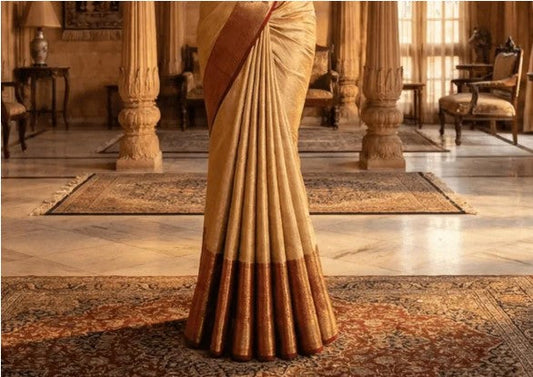
The front pleats act as flexible movement zones. As the wearer walks, the pleats gently expand and contract, allowing freedom of motion while maintaining the saree's structure.
-
Encourages measured steps
-
Reduces abrupt movements
-
Creates a rhythmic walking pattern
-
Enhances visual flow
The result is a walk that appears naturally poised and refined.

The Pallu: The Symbol of Motion
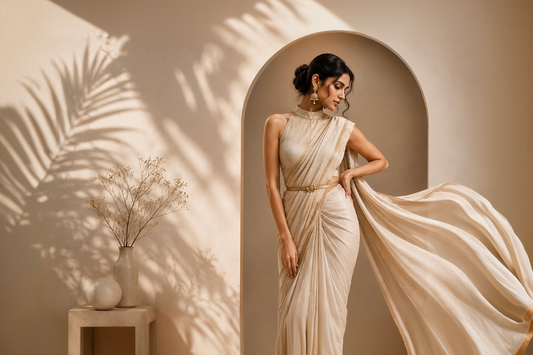
The pallu is often the most expressive part of a saree. As the body moves, the pallu follows with a slight delay due to momentum, creating a soft trailing effect.
-
Adds elegance to every step
-
Enhances visual movement
-
Creates a sense of fluidity
-
Draws attention to the overall silhouette

It is one of the key reasons why saree movement appears so graceful, both in real life and on camera.
Posture and Presence
A well-draped saree often encourages the wearer to stand taller and move with confidence. To carry the drape comfortably, women naturally align their shoulders, maintain an upright spine, and move with greater awareness.
Good posture contributes to:
-
Better balance
-
Smoother movement
-
Stronger body language
-
A more confident appearance
Grace, therefore, becomes a combination of both the garment and the wearer.

The Psychology of Elegance
Clothing influences behavior. When wearing a saree, many women become more mindful of their movements, gestures, and posture. This increased awareness often leads to more composed and deliberate actions.
The saree doesn't force grace—it inspires it.
Its flowing structure encourages a natural rhythm in movement, helping the wearer project confidence, sophistication, and poise.

Why Sarees Look Beautiful in Motion
The beauty of a saree is most visible when it moves.
-
Pleats create gentle fabric waves.
-
The pallu flows with momentum.
-
The drape responds to body motion.
-
Light and shadow play across the folds.
This dynamic interaction between fabric and movement creates a visual elegance that few garments can match.

Traditional Wisdom Meets Body Science
For centuries, Indian women have worn sarees while working, celebrating, traveling, and leading everyday lives. Over time, draping styles evolved to balance comfort, mobility, and beautModern studies of body movement suggest that garments encouraging controlled motion, upright posture, and body awareness often enhance perceptions of grace. saree naturally embodies all these qualities.

Tags:
Related articles

Jul 29 2026
A Saree as a Guru – Life Lesson
Jul 25 2026
