


Kerala Sarees – A Complete Guide to the Rich Textile Heritage
Introduction
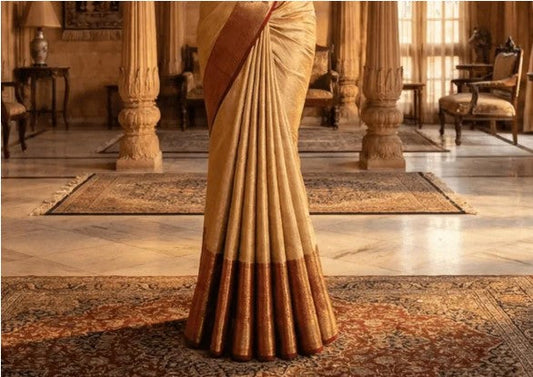
Kerala, often called "God's Own Country," is renowned for its elegant handloom traditions and timeless sarees. The state is especially famous for the Kasavu Saree, also known as the Kerala Saree, which symbolizes simplicity, grace, and cultural pride. Characterized by its off-white or cream body with a shimmering gold border, the Kasavu saree has been an integral part of Kerala's traditions for centuries and is worn during festivals, weddings, and religious ceremonies.
Famous Sarees
Traditional Handloom Sarees
1. Kasavu Saree
- Off-white cotton with a gold zari (kasavu) border.
- The iconic Kerala saree.
- Worn at Onam, Vishu, and weddings.
2. Balaramapuram Saree
- Handloom from Balaramapuram, Thiruvananthapuram, GI-tagged.
- Very fine cotton with pure zari.
- Considered one of the best Kasavu weaves.
3. Kuthampully Saree
- From Kuthampully, Thrissur district, GI-tagged.
- Kasavu with more decorative woven designs.
- Soft cotton, comfortable in warm weather.
4. Chendamangalam Saree
- From Chendamangalam, Ernakulam district, GI-tagged.
- Fine cotton with simple, elegant borders.
- Traditional craft revived after the 2018 floods.
5. Kasaragod Saree
- Cotton handloom from Kasaragod, GI-tagged.
- Durable and light.
- Bright colors and simple designs.
6. Mundum Neriyathum (Set Mundu)
- Traditional two-piece attire: mundu worn at the waist and neriyathu over the shoulder.
- The ancient form of Kerala dress.
- Worn at festivals and cultural events.
Kasavu Variations
7. Kasavu Tissue Saree
- Kasavu woven with metallic tissue threads.
- Golden shimmer across the body.
- Popular for weddings.
8. Kasavu Silk Saree
- Kasavu design on silk.
- Rich and smooth.
- Good for festive occasions.
9. Colored Kara Kasavu Saree
- Kasavu with colored borders (kara) like red, green, or blue.
- Adds color to the classic design.
- Modern and traditional mix.
10. Kasavu Temple Border Saree
- Kasavu with temple-shaped borders.
- Traditional and graceful.
- Popular for temple visits.
11. Onam Saree
- Kasavu worn specially for Onam, often with motifs.
- Symbol of the harvest festival.
- Worn by women across Kerala.
Painted and Printed Sarees
12. Kerala Mural Painted Saree
- Hand-painted with Kerala mural art.
- Shows gods, goddesses, and Krishna scenes.
- Artistic and colorful on Kasavu base.
13. Kathakali Printed Saree
- Features Kathakali dancer faces.
- Celebrates Kerala's classical art form.
- Bright and cultural.
14. Peacock Motif Kasavu Saree
- Kasavu with painted or woven peacock designs.
- Popular modern design.
- Elegant and festive.
15. Krishna Motif Kasavu Saree
- Features Lord Krishna designs, often with Guruvayur connections.
- Religious and festive.
- Popular for Vishu and temple visits.
16. Kasavu Stripes Saree
- Kasavu with thin gold zari stripes across the body.
- Adds shine while keeping a simple look.
- Popular for festive wear.
17. Kasavu Butta Saree
- Small gold zari motifs (butta) woven across the body.
- Elegant and festive.
- Classic choice for weddings.
18. Mural Painted Tissue Saree
- Kerala mural art painted on Kasavu tissue.
- Combines shimmer with traditional art.
- Rich and eye-catching.
19. Double Border Kasavu Saree
- Two zari borders on each side.
- Richer look than a single border.
- Popular for special occasions.
20. Kerala Colored Handloom Saree
- Handloom cotton in solid colors instead of off-white.
- Keeps Kerala's simple border style.
- Light and comfortable for daily wear.
History
Kerala's weaving tradition dates back over 2,000 years, with references found in ancient trade records. The state's textile heritage flourished through maritime trade with the Romans, Arabs, and Chinese. The iconic Kasavu saree evolved as ceremonial attire and became closely associated with Kerala's temple traditions and cultural festivals. Handloom weaving continues to thrive, especially in villages known for producing authentic Kasavu fabrics.
Origin Region
Major weaving centres include:
-
Balaramapuram (Thiruvananthapuram)
-
Chendamangalam (Ernakulam)
-
Kuthampully (Thrissur)
-
Kannur
-
Kozhikode
-
Palakkad
Fabric Used
-
Handloom Cotton
-
Fine Cotton
-
Cotton-Silk Blend
-
Silk
-
Pure Zari
-
Tested Zari
Weaving Technique
Traditional Handloom Weaving
Kerala sarees are woven on handlooms using fine cotton yarn.
Zari Border Weaving
The characteristic gold border is woven into the fabric using genuine or tested zari.
Pit Loom Weaving
Many traditional weaving centres continue to use pit looms for authentic handloom production.
Fine Count Cotton Weaving
Produces lightweight, breathable fabric suitable for Kerala's tropical climate.
Traditional Motifs
Kerala sarees are known for their elegant simplicity and may feature:
-
Plain gold border (Kasavu)
-
Temple borders
-
Peacock
-
Elephant
-
Kathakali figures
-
Coconut palm
-
Lotus
-
Mango (Paisley)
-
Floral vines
-
Traditional geometric patterns
Modern designer Kasavu sarees may also include mural paintings and nature-inspired motifs.
Natural Dyes & Colors
Traditionally, Kerala handloom sarees relied on natural cotton colours with minimal dyeing.
Natural dye sources include:
-
Turmeric – Yellow
-
Indigo – Blue
-
Madder Root – Red
-
Pomegranate Rind – Beige
-
Leaves – Green
Traditional colour palette:
-
Cream
-
Off-White
-
Ivory
-
Gold
Modern versions are also available in:
-
Green
-
Red
-
Blue
-
Maroon
-
Pink
-
Black
Cultural Significance
The Kasavu Saree is one of Kerala's strongest cultural symbols. It represents purity, elegance, and prosperity and is traditionally worn during Onam, Vishu, weddings, temple festivals, and important family celebrations. Kerala brides often wear richly woven Kasavu silk sarees, making them an essential part of the state's ceremonial attire.
Festivals & Occasions
Kerala sarees are commonly worn during:
-
Onam
-
Vishu
-
Thrissur Pooram
-
Navaratri
-
Temple festivals
-
Weddings
-
Housewarming ceremonies
-
Religious rituals
-
Cultural programs
-
Classical dance performances
GI Tag Status
|
Saree / Textile |
GI Status |
|
Balaramapuram Sarees and Fine Cotton Fabrics |
GI Registered |
|
Chendamangalam Handloom |
GI Registered |
|
Kuthampully Sarees |
GI Registered |
The traditional Kasavu saree is produced in several GI-recognized weaving clusters across Kerala.
How to Identify an Authentic Kerala Saree
-
Cream or off-white handwoven cotton fabric.
-
Elegant woven gold zari border (not printed).
-
Lightweight and breathable texture.
-
Fine, even handloom weave with slight natural variations.
-
Genuine products often carry Handloom Mark, Silk Mark (for silk variants), or GI identification from recognized weaving clusters.
-
Purchase from government handloom societies, certified cooperatives, or reputed Kerala handloom stores.
Care Instructions
-
Dry clean silk Kasavu sarees.
-
Hand wash cotton Kasavu sarees using mild detergent.
-
Dry in shade to preserve the zari.
-
Store wrapped in muslin or cotton cloth.
-
Avoid spraying perfume directly on the fabric.
-
Iron on low to medium heat from the reverse side.
-
Refold periodically to protect the zari border.
Interesting Facts
-
The Kasavu Saree is the official traditional saree of Kerala and is instantly recognized by its elegant cream body with a gold border.
-
Kerala's handloom tradition dates back more than 2,000 years.
-
Balaramapuram is internationally known for producing fine handwoven cotton textiles.
-
The simplicity of the Kasavu saree makes it one of India's most timeless and elegant traditional garments.
-
Many classical dancers, including Mohiniyattam performers, wear costumes inspired by the Kasavu saree.
-
Modern designers have reimagined the Kasavu saree with colourful borders, mural art, and contemporary embroidery while preserving its traditional essence.
-
Kerala's handloom industry continues to support thousands of weaving families and keeps one of India's oldest textile traditions alive.
Tags:
Previous
Karnataka Sarees – A Complete Guide to the Rich Textile Heritage
Next
Lakshadweep Sarees – A Complete Guide to the Textile Heritage
Related articles
Jul 29 2026
A Saree as a Guru – Life Lesson

Jul 25 2026
Chapter 25 – The Science of Comfort l RESSA

Jul 25 2026
