


Jharkhand Sarees – A Complete Guide to the Rich Textile Heritage
Introduction
Jharkhand is known for its rich tribal culture, dense forests, and centuries-old handloom traditions. The state is especially famous for its Tussar (Tasar) Silk, one of India's finest wild silks, and handwoven cotton textiles. Jharkhand sarees are admired for their natural texture, earthy elegance, tribal-inspired motifs, and eco-friendly production methods. The weaving tradition supports thousands of rural artisans and reflects the state's deep cultural heritage.
Famous Sarees
Tussar Silk Sarees
1. Jharkhand Tussar Silk Saree
- Jharkhand produces the most tussar silk in India.
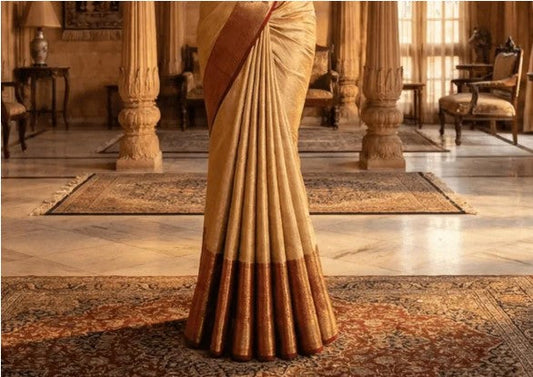
- Natural golden color and textured feel.
- Elegant, breathable, and durable.
2. Kuchai Silk Saree
- Organic tussar from Kuchai, Seraikela-Kharsawan district.
- Silkworms are reared on forest trees without chemicals.
- Known for its natural quality.
3. Godda Tussar Saree
- Woven by handloom weavers in Godda district.
- Traditional tussar weaving craft.
- Simple and earthy designs.
4. Ghicha Tussar Saree
- Made from rough, hand-reeled tussar yarn.
- Uneven, natural texture.
- Rustic look.
5. Tussar Zari Saree
- Tussar silk with zari borders or pallu.
- Festive and rich look.
- Popular for weddings.
6. Jharcraft Tussar Saree
- Made under Jharcraft, the state's handloom and handicraft brand.
- Supports local tribal and rural weavers.
- Reliable quality and fair pricing.
Tribal Art Sarees
7. Sohrai Art Saree
- Painted with Sohrai art from Hazaribagh, GI-tagged.
- Animals, plants, and harvest themes.
- Earthy colors from natural pigments.
8. Khovar Art Saree
- Inspired by Khovar wedding wall paintings.
- Symbolic patterns of love and fertility.
- Usually in black and white or earthy tones.
9. Paitkar Painting Saree
- Inspired by Paitkar scroll paintings from Amadubi village.
- One of India's oldest scroll-painting traditions.
- Tells folk and mythological stories.
Traditional Tribal Sarees
10. Panchi-Parhan (Santhali Saree)
- Traditional two-piece attire of Santhali women.
- Usually checked cotton in green, red, or other bright colors.
- Worn at festivals and dances.
11. Laal Paar Saree
- White or cream cotton with a red border.
- Worn during festivals like Sarhul and Karma.
- Symbol of tribal culture and celebration.
12. Jharkhand Handloom Cotton Saree
- Simple cotton sarees woven by local weavers.
- Comfortable for everyday wear.
- Affordable and durable.
13. Sohrai Tussar Saree
- Sohrai art painted on Jharkhand tussar.
- Combines the state's best silk and art.
- Premium, handmade piece.
14. Tussar Silk-Cotton Saree
- Blend of tussar and cotton.
- Lighter and more affordable.
- Comfortable for daily and office wear.
15. Printed Tussar Saree
- Tussar with block or screen prints.
- Colorful designs on a natural base.
- Stylish and affordable.
16. Hand-painted Tussar Saree
- Floral or folk designs painted by hand.
- Each saree is unique.
- Artistic and elegant.
17. Tussar Batik Saree
- Wax-resist dyeing on tussar silk.
- Crackled patterns with bold colors.
- Handmade and artistic.
18. Kantha Embroidered Tussar Saree
- Kantha running-stitch embroidery on tussar.
- Adds color and texture.
- Popular in eastern India.
19. Tussar Check Saree
- Woven checks or stripes on tussar.
- Simple, classic look.
- Good for office wear.
20. Tussar Temple Border Saree
- Triangle-shaped temple borders.
- Traditional and graceful.
- Popular for pujas and festivals.
History
Jharkhand has a long history of silk production and weaving, particularly among its tribal communities. The forests of the state provide an ideal habitat for wild silkworms that produce Tussar silk. Traditional weaving techniques have been passed down through generations, and the region has long supplied silk to different parts of India. Today, Jharkhand is one of the country's leading producers of Tussar silk.
Origin Region
Major weaving and silk-producing areas include:
-
Chaibasa (West Singhbhum)
-
Dumka
-
Godda
-
Deoghar
-
Ranchi
-
Hazaribagh
-
Saraikela-Kharsawan
-
Pakur
Fabric Used
-
Tussar (Tasar) Silk
-
Cotton
-
Organic Cotton
-
Cotton-Silk Blend
-
Mulberry Silk (limited production)
-
Linen Blend (modern collections)
Weaving Technique
Traditional Handloom Weaving
Most sarees are woven manually by skilled artisans on traditional handlooms.
Tussar Silk Weaving
Wild silk yarn is carefully woven to preserve its natural texture and shine.
Extra Weft Weaving
Additional coloured threads create decorative woven motifs.
Tribal Hand Weaving
Traditional weaving methods produce distinctive patterns inspired by local culture and nature.
Traditional Motifs
Jharkhand sarees commonly feature:
-
Tribal geometric designs
-
Trees of Life
-
Flowers
-
Leaves
-
Elephant
-
Peacock
-
Deer
-
Fish
-
Sun motifs
-
Traditional borders
Natural Dyes & Colors
Traditionally, artisans use natural dyes obtained from forests and plants.
Natural dye sources include:
-
Indigo – Blue
-
Turmeric – Yellow
-
Madder Root – Red
-
Tree Bark – Brown
-
Pomegranate Rind – Beige
-
Forest Leaves – Green
Popular saree colours include:
-
Natural Gold
-
Beige
-
Cream
-
Maroon
-
Red
-
Green
-
Mustard
-
Brown
-
Black
-
Ivory
The natural golden hue of Tussar silk gives Jharkhand sarees their distinctive appearance.
Cultural Significance
Jharkhand sarees represent the state's tribal identity, traditional craftsmanship, and close relationship with nature. Tussar silk sarees are highly valued for weddings, festivals, and religious ceremonies, while cotton sarees are widely worn for daily use. The handloom industry provides employment to thousands of artisan families and plays an important role in preserving indigenous weaving traditions.
Festivals & Occasions
Jharkhand sarees are commonly worn during:
-
Sarhul
-
Karma Festival
-
Sohrai
-
Tusu Parab
-
Mage Parab
-
Diwali
-
Durga Puja
-
Weddings
-
Religious ceremonies
-
Cultural fairs
GI Tag Status
|
Saree / Textile |
GI Status |
|
Kurkhu (Kharsawan) Tussar Silk |
Regional recognition |
|
Current Status |
Jharkhand does not have a GI-registered traditional saree. However, Jharkhand Tussar silk is nationally renowned and several silk-based products from the region have received recognition. |
How to Identify an Authentic Jharkhand Saree
-
Genuine Tussar silk has a slightly textured feel and a natural golden sheen.
-
Handwoven fabric shows slight natural irregularities.
-
Traditional tribal motifs are woven rather than printed.
-
Soft, breathable, and lightweight fabric.
-
Purchase from government handloom emporiums, Jharkhand Silk Textile and Handicraft Development Corporation (JHARCRAFT), or certified artisan cooperatives.
Care Instructions
-
Dry clean Tussar silk sarees.
-
Hand wash cotton sarees with mild detergent.
-
Dry in shade to preserve colours.
-
Store wrapped in muslin or cotton cloth.
-
Refold silk sarees periodically.
-
Avoid moisture and direct exposure to perfumes.
-
Iron on low to medium heat.
Interesting Facts
-
Jharkhand is one of India's leading producers of Tussar (Tasar) silk.
-
Tussar silk is produced from wild silkworms that thrive in the state's forests.
-
The natural golden colour and textured finish make Tussar silk unique among Indian silks.
-
Tribal communities have preserved traditional weaving techniques for generations.
-
JHARCRAFT has played a significant role in promoting Jharkhand's handloom and silk products.
-
The state's handloom sector provides livelihoods to thousands of rural women and artisans.
-
Jharkhand's sarees beautifully combine sustainable silk production with indigenous craftsmanship, making them a symbol of eco-friendly luxury.
Tags:
Previous
Jammu & Kashmir Sarees – A Complete Guide to the Textile Heritage
Next
Karnataka Sarees – A Complete Guide to the Rich Textile Heritage
Related articles
Jul 29 2026
A Saree as a Guru – Life Lesson

Jul 25 2026
Chapter 25 – The Science of Comfort l RESSA
Jul 25 2026
