


The Saree of Onam and Temples
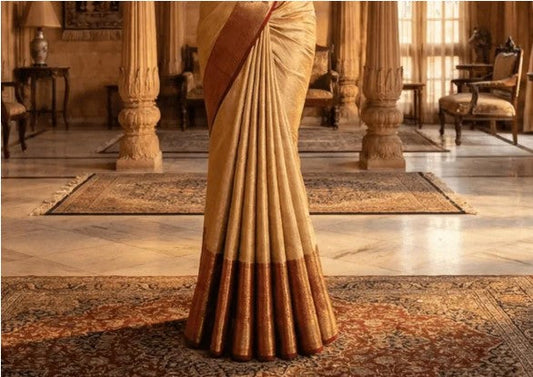
In Kerala, there is a saree that needs no introduction — the Kasavu. Cream-white cotton with a gold zari border, it is the saree of Onam, of temple visits, of weddings, and of the quiet dignity that Kerala's textile tradition has always embodied. In a country of extraordinary textile diversity, the Kasavu stands apart for its restraint — and its restraint is its power.
What Kasavu Means
The word kasavu refers to the gold zari used in the border — derived from the Sanskrit word for gold. The saree itself is called mundum neriyathum in its traditional two-piece form: the mundu (lower garment) and the neriyathu (upper drape). The single-piece version worn as a conventional saree is a more recent adaptation.
The Weaving Centres
Kasavu sarees are woven primarily in Balaramapuram near Thiruvananthapuram and in Chendamangalam near Kochi. Each centre has its own weaving style — Balaramapuram is known for finer cotton and more delicate borders, while Chendamangalam produces heavier fabrics with broader zari work. Both are GI-tagged and protected under the Handlooms (Reservation of Articles for Production) Act.
The Gold Border
The kasavu border ranges from a simple single line to elaborate multi-layered designs featuring temple motifs, elephants, and lotus patterns. The width of the border — from half an inch to several inches — indicates the formality of the occasion. A narrow border for daily wear; a broad, heavily worked border for weddings and festivals.
Kasavu in Contemporary Fashion
Designers have increasingly embraced Kasavu as a canvas for contemporary expression — adding colour to the body while retaining the gold border, or using the fabric for garments beyond the saree. But the classic cream-and-gold combination remains the most beloved, a reminder that some things achieve perfection and need no improvement.
Tags:
Previous
Pochampally Ikat: Geometry Woven Into Silk
Next
Saree Blouse Necklines: A Complete Style Guide
Related articles

Jul 29 2026
A Saree as a Guru – Life Lesson



Jul 25 2026
Chapter 25 – The Science of Comfort l RESSA

Jul 25 2026
