


Delhi Sarees – A Complete Guide to the Textile Heritage
Introduction
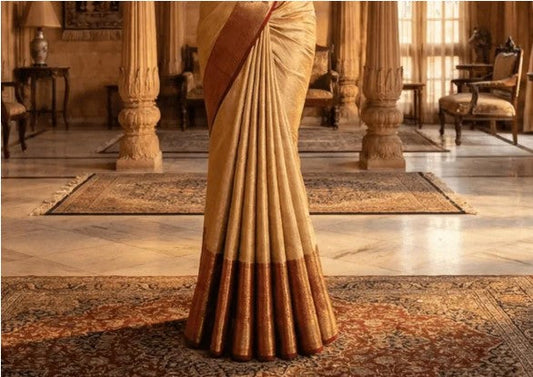
Delhi, the capital of India, is a vibrant cultural and fashion hub rather than a traditional saree-weaving region. For centuries, the city has been a center for trade, royal patronage, and textile craftsmanship, bringing together handwoven sarees from every corner of the country. While Delhi does not have an indigenous saree style of its own, it is famous for its designer sarees, luxurious embroidery, and thriving handloom markets that showcase India's rich textile heritage.
Famous Sarees
Although Delhi has no native saree, the following sarees are especially popular:
1. Banarasi Silk Saree
-
Rich silk fabric with intricate zari weaving
-
Preferred for weddings and bridal wear
2. Chanderi Saree
-
Lightweight silk-cotton blend
-
Elegant zari borders
-
Ideal for formal and festive occasions
3. Kanjeevaram Silk Saree
-
Luxurious South Indian silk
-
Broad contrast borders
-
Popular for grand celebrations
4. Organza Saree
-
Sheer and lightweight
-
Floral embroidery and digital prints
-
Modern designer favourite
5. Linen Saree
-
Comfortable and breathable
-
Suitable for office and casual wear
6. Designer Sarees
-
Contemporary styles with sequins, embroidery, and fusion designs
-
Widely available in Delhi's fashion boutiques
History
Delhi has been an important textile trading center since the Delhi Sultanate and Mughal Empire. Royal courts encouraged weaving, embroidery, zari work, and textile craftsmanship from across India. Today, Delhi continues this legacy as one of the country's largest markets for handloom, designer, and bridal sarees, attracting artisans, designers, and buyers from all regions.
Origin Region
Delhi is primarily a trading and fashion center rather than a weaving center. Sarees sold here are sourced from:
-
Uttar Pradesh
-
Gujarat
-
Rajasthan
-
West Bengal
-
Tamil Nadu
-
Karnataka
-
Madhya Pradesh
-
Assam
-
Odisha
-
Maharashtra
Fabric Used
Popular saree fabrics available in Delhi include:
-
Silk
-
Cotton
-
Linen
-
Organza
-
Chiffon
-
Georgette
-
Tissue Silk
-
Satin
-
Velvet
-
Cotton-Silk Blend
Weaving Technique
Delhi showcases sarees created using techniques from across India, including:
Handloom Weaving
Traditional manually woven sarees from various states.
Zari Weaving
Gold and silver metallic thread work used in luxurious silk sarees.
Jamdani Weaving
Intricate handwoven motifs woven into fine fabrics.
Ikat Weaving
Tie-and-dye yarn weaving creating geometric designs.
Hand Embroidery
Popular techniques include:
-
Zardozi
-
Aari work
-
Resham embroidery
-
Sequin work
-
Mirror work
Traditional Motifs
Common motifs found in sarees popular in Delhi include:
-
Paisley (Kairi)
-
Lotus
-
Peacock
-
Floral vines
-
Mughal gardens
-
Temple borders
-
Geometric patterns
-
Buttas
-
Mughal jaal designs
-
Contemporary abstract motifs
Natural Dyes & Colors
Traditional handcrafted sarees available in Delhi may use natural dyes such as:
-
Indigo – Blue
-
Turmeric – Yellow
-
Madder Root – Red
-
Pomegranate Rind – Beige
-
Henna – Brown
Popular saree colours include:
-
Red
-
Maroon
-
Emerald Green
-
Royal Blue
-
Mustard
-
Black
-
Ivory
-
Gold
-
Pink
-
Pastel Shades
Cultural Significance
Delhi celebrates India's textile diversity. Sarees are worn during weddings, festivals, official ceremonies, cultural programs, and corporate events. Designer sarees blending traditional craftsmanship with modern fashion are especially popular, making Delhi one of India's leading fashion destinations.
Festivals & Occasions
Sarees are commonly worn during:
-
Diwali
-
Holi
-
Navratri
-
Karva Chauth
-
Durga Puja
-
Eid
-
Weddings
-
Reception ceremonies
-
Office events
-
Cultural festivals
GI Tag Status
Current Status: Delhi does not have a Geographical Indication (GI)-registered saree. However, the city is one of India's largest retail and fashion markets for numerous GI-tagged sarees such as Banarasi, Kanjeevaram, Chanderi, Patola, Sambalpuri, and Muga Silk.
How to Identify an Authentic Saree
-
Purchase from reputed handloom stores, government emporiums, or certified boutiques.
-
Check for Silk Mark certification on genuine silk sarees.
-
Look for a GI tag when buying region-specific sarees.
-
Examine weaving, embroidery, and zari work for fine craftsmanship.
-
Authentic handloom sarees have slight natural irregularities rather than machine-perfect finishes.
Care Instructions
-
Dry clean silk, organza, and embroidered sarees.
-
Hand wash cotton and linen sarees with mild detergent.
-
Dry in shade to protect colours.
-
Store wrapped in muslin or cotton cloth.
-
Refold silk sarees periodically.
-
Avoid perfumes directly on the fabric.
-
Iron according to the fabric type using low to medium heat.
Interesting Facts
-
Delhi has been a major textile trading center for over 700 years.
-
The city is home to some of India's largest bridal and designer saree markets.
-
Traditional Mughal embroidery techniques such as Zardozi remain highly popular in Delhi fashion.
-
Delhi hosts numerous handloom exhibitions and textile fairs every year.
-
Fashion designers in Delhi frequently blend traditional Indian weaving with contemporary styles.
-
Shoppers can find sarees from almost every Indian state in a single marketplace.
-
Although Delhi has no indigenous saree tradition, it plays a vital role in promoting and preserving India's diverse textile heritage.
Tags:
Previous
Dadra and Nagar Haveli and Daman and Diu Sarees
Next
Goa Sarees – A Complete Guide to the Textile Heritage
Related articles
Jul 29 2026
A Saree as a Guru – Life Lesson

Jul 25 2026
Chapter 25 – The Science of Comfort l RESSA

Jul 25 2026
