


Weight Distribution of a Saree: The Hidden Science Behind Comfort and Grace
One of the most remarkable yet often overlooked features of a saree is how it distributes its weight across the body. Unlike many modern garments that rely on shoulder straps, tight waistbands, or fitted structures, a saree uses a unique draping system that spreads its weight naturally, contributing to both comfort and elegance.
How a Saree Distributes Weight
A saree typically weighs anywhere between 300 grams and 2 kilograms, depending on the fabric, weaving technique, embroidery, and embellishments. Rather than concentrating this weight in one area, the saree distributes it across multiple points:
-
The waist (primary support point)
-
The hips
-
The petticoat waistband
-
The pleats
-
The shoulder (through the pallu)

This balanced distribution reduces pressure on any single body part and allows the garment to feel lighter than its actual weight.
The Waist: The Main Anchor Point
The waist acts as the saree's central support system.
When tucked properly into the petticoat:
-
Most of the saree's weight is carried around the waistline.
-
The weight is distributed in a circular manner around the torso.
-
This creates stability and prevents the garment from pulling excessively in one direction.
From a biomechanics perspective, placing weight near the body's center helps maintain balance and reduces strain during movement.

The Role of Pleats
Pleats are not just a design element—they help manage fabric weight.:
-
Concentrate excess fabric into a structured arrangement.
-
Distribute fabric volume evenly at the front.
-
Allow movement without creating imbalance.
-
Prevent bunching and uneven weight distribution.
Properly made pleats contribute significantly to comfort, especially during long hours of wear.

How the Pallu Balances the Saree
The pallu acts as a secondary weight-balancing component.
When draped over the shoulder:
-
It shifts a portion of the fabric weight upward.
-
It helps balance the front and back sections of the saree.
-
It prevents the entire weight from resting solely on the waist.
Heavily embroidered or embellished pallus may increase shoulder load, which is why secure draping is important.

Weight Distribution and Posture
A well-draped saree often encourages better posture because:
-
Weight is spread evenly around the body.
-
The wearer naturally aligns the shoulders and spine.
-
Core muscles engage slightly to maintain balance.
This balanced support system contributes to the poised and graceful appearance often associated with saree wearers.

Impact of Different Fabrics
Lightweight Fabrics (Chiffon, Georgette, Crepe)
-
Lower overall weight
-
Minimal strain on the waist and shoulder
-
Greater movement flexibility
Medium-Weight Fabrics (Cotton, Linen)
-
Balanced support
-
Stable drape
-
Comfortable for daily wear
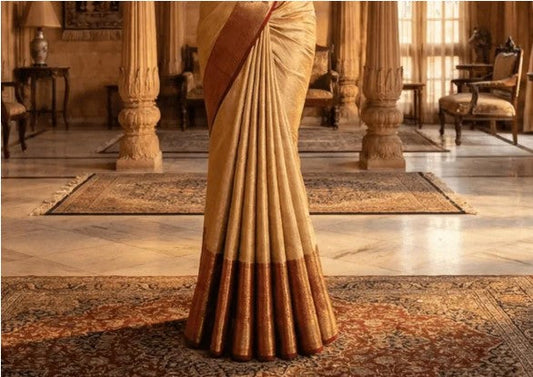
Heavy Fabrics (Silk, Banarasi, Kanjivaram)
-
More weight concentrated in pleats and pallu
-
Require stronger waist support
-
Create a rich, structured silhouette
Traditional Design, Scientific Efficiency
Long before modern ergonomics existed, traditional saree draping techniques evolved to solve practical challenges of comfort and mobility. By distributing weight around the body's natural center of gravity, the saree achieves a balance between functionality and elegance.

Air Circulation in a Saree: The Science Behind Comfort and Breathability
One of the reasons the saree has remained relevant for centuries across India's diverse climates is its exceptional ability to promote natural air circulation. Unlike many fitted garments, a saree is an unstitched piece of fabric that creates multiple layers, folds, and air pockets around the body, allowing continuous airflow and thermal comfort.
Natural Ventilation Through Draping
A saree is not tightly fitted to the body. The space created between the fabric and the skin allows air to move freely, helping regulate body temperature.
This natural ventilation:
-
Reduces heat buildup.
-
Promotes airflow around the torso and legs.
-
Enhances overall comfort during long wear.
-
Helps the body stay cooler in warm climates.

The Role of Pleats
Pleats do more than add elegance—they create small channels of air between layers of fabric.
These channels:
-
Allow air to circulate with every movement.
-
Prevent the fabric from sticking closely to the body.
-
Improve breathability, especially during walking.
As the wearer moves, the pleats expand and contract slightly, encouraging fresh air exchange.

Airflow During Movement
Walking naturally increases air circulation in a saree.
With each step:
-
The pleats open and close.
-
The pallu moves gently.
-
Air enters and exits between fabric layers.
This creates a subtle cooling effect that many wearers experience, particularly in lightweight fabrics.

Why Sarees Feel Cooler Than Many Modern Garments
Many modern outfits fit closely to the body, limiting airflow and trapping heat. A saree, however, maintains a layer of air between the skin and fabric.
From a thermal science perspective:
-
Moving air removes excess body heat.
-
Air pockets act as temperature regulators.
-
Continuous ventilation helps maintain comfort.
This makes sarees especially suitable for tropical and humid climates.

Fabric Choice and Air Circulation
Different fabrics influence airflow differently.
Cotton Sarees
-
Excellent breathability.
-
High moisture absorption.
-
Ideal for hot weather.
Airflow: ⭐⭐⭐⭐⭐
-
Highly breathable
-
Natural moisture absorption
-
Excellent summer comfort
Visual: Large blue airflow arrows through the fabric.
Linen Sarees
-
Superior airflow.
-
Quick heat dissipation.
-
Naturally cooling.
Airflow: ⭐⭐⭐⭐⭐
-
Natural ventilation
-
Quick moisture release
-
Cool and airy feel
Visual: Open weave texture with strong airflow arrows.
Chiffon and Georgette
-
Lightweight and airy.
-
Allow easy movement of air.
-
Comfortable in moderate heat.
Airflow: ⭐⭐⭐⭐
-
Lightweight drape
-
Air moves easily during walking
-
Creates a cooling effect through movement
Visual: Flowing pallu with moving air arrows.

Silk Sarees
-
Moderate breathability.
-
Better temperature regulation than many synthetic fabrics.
-
Suitable for festive occasions.
Airflow: ⭐⭐⭐
-
Moderate breathability
-
Richer and denser weave
-
More heat retention than cotton
Visual: Smaller airflow arrows around structured pleats.
Synthetic Fabrics
-
Lower breathability.
-
Can trap more heat.
-
Air circulation depends heavily on weave structure.
Airflow: ⭐⭐
-
Lower breathability
-
Can trap heat and moisture
-
Less natural ventilation
Visual: Limited airflow arrows with slight heat icons.
The Pallu as a Cooling Element
The pallu contributes to airflow by:
-
Creating movement-driven ventilation.
-
Preventing complete enclosure of the upper body.
-
Allowing heat to escape naturally.
The flowing motion of the pallu often enhances the feeling of freshness, particularly outdoors.

Traditional Wisdom Backed by Science
For centuries, women across India wore sarees while working, traveling, and managing daily life in hot and humid environments. Traditional draping methods evolved not only for beauty but also for practical comfort.
Modern textile science now recognizes that garments allowing air movement:
-
Improve thermal comfort.
-
Reduce heat stress.
-
Enhance wearability for extended periods.
The saree achieves all three through its unique draping structure.

Tags:
Previous
Chapter 23 – The Science of Grace: How a Saree Shapes Movement l RESSA
Next
What's trending?
Related articles

Jul 29 2026
A Saree as a Guru – Life Lesson
Jul 25 2026
Chapter 25 – The Science of Comfort l RESSA
Jul 25 2026
