


-
Saree as a Symbol of Femininity
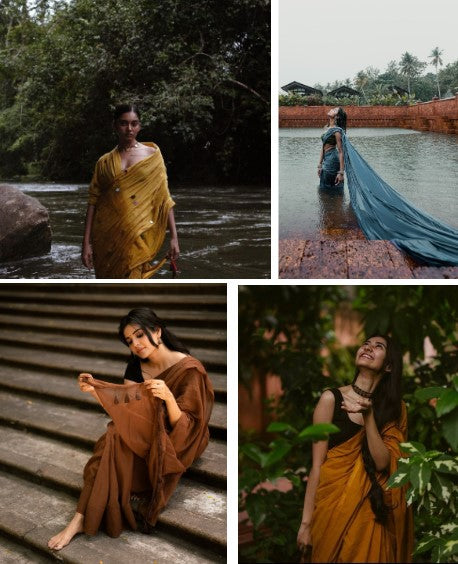
The saree is one of the most enduring symbols of femininity, grace, and cultural identity. Across generations, it has represented not just clothing, but an expression of womanhood itself. Its flowing silhouette, elegant drape, and deep cultural roots make it a powerful visual and emotional symbol of feminine identity.
Understanding Femininity in Psychology
Femininity is not defined only by appearance—it is a combination of traits such as grace, empathy, softness, strength, confidence, and emotional expression. Psychology suggests that femininity is also shaped by cultural symbols, and clothing plays a major role in reinforcing these perceptions.

The saree naturally aligns with many of these qualities, making it a strong cultural representation of femininity.
The Elegance of Flow and Movement
One of the most distinctive features of a saree is its fluid structure. Unlike structured garments, the saree flows with the body, creating a sense of softness and grace.
This flowing nature is often associated with:

-
Gentle movement
-
Natural elegance
-
Subtle beauty
-
Poise and balance
These qualities contribute to how femininity is visually perceived in social and cultural contexts.

Cultural Definition of Womanhood
The saree has been worn by women in India for thousands of years. Over time, it has become deeply connected with traditional ideas of womanhood.
-
Respect and dignity
-
Family values
-
Tradition and heritage
-
Emotional strength
This cultural association strengthens its identity as a symbol of femininity.

Strength Within Grace
While the saree is often associated with softness and elegance, it also reflects inner strength. Women have worn sarees in every role—leaders, professionals, mothers, artists, and workers.
This duality shows that femininity is not weakness, but a balance of:
-
Grace and strength
-
Emotion and resilience
-
Tradition and independence
The saree visually represents this powerful balance.

Color Psychology and Feminine Expression
Colors in sarees also contribute to expressions of femininity. Different shades reflect different emotional tones:
-
Pink and pastels: softness and warmth
-
Red: confidence and celebration
-
White: purity and simplicity
-
Yellow: joy and positivity
-
Blue: calm and stability
These colors allow women to express different dimensions of femininity depending on mood and occasion.

Saree and Body Language of Femininity
The saree naturally influences body language, which enhances feminine expression. It encourages:
-
Graceful posture
-
Gentle movements
-
Controlled gestures
-
Soft yet confident presence
This refined body language contributes to the overall perception of femininity in social settings.

Emotional and Psychological Identity
For many women, wearing a saree creates a deeper emotional connection to their identity. It allows them to feel grounded, culturally connected, and self-assured.
Psychologically, when clothing aligns with personal identity, it increases:
-
Self-confidence
-
Emotional comfort
-
Sense of belonging
This reinforces the saree as a personal and emotional symbol of femininity.

Modern Femininity and the Saree
In the modern world, femininity is no longer limited to traditional roles. Women balance careers, education, leadership, and personal life.
The saree adapts to this evolution, representing a modern feminine identity that is:

-
Independent yet rooted in tradition
-
Professional yet graceful
-
Bold yet elegant
This adaptability keeps the saree relevant across generations.

-
Saree and Cultural Identity
The saree is more than a traditional outfit—it is a living symbol of cultural identity. Worn across generations and regions, it reflects history, heritage, values, and belonging. In psychology, cultural identity plays a vital role in shaping how individuals see themselves, and the saree stands as one of the strongest visual expressions of that identity.

Understanding Cultural Identity
Cultural identity refers to the sense of belonging to a group that shares traditions, values, language, and customs. It influences behavior, beliefs, and self-perception. Clothing is one of the most visible ways people express this identity.
The saree acts as a cultural marker that instantly connects the wearer to a rich and diverse heritage.

A Heritage Woven in Fabric
The saree has existed for thousands of years and has evolved differently across regions of India. Each style reflects

-
Banarasi sarees reflect royal craftsmanship
-
Kanjeevaram sarees represent South Indian tradition
-
Bandhani and Patola reflect Gujarati heritage
-
Cotton handlooms reflect simplicity and rural culture.

Saree as a Sense of Belonging
Wearing a saree often creates a strong feeling of belonging. Psychologically, humans feel more secure and confident when they are connected to their roots.
The saree reinforces:
-
Connection to family traditions
-
Respect for cultural values
-
Continuity of heritage
-
Emotional grounding in identity
This sense of belonging strengthens self-confidence and emotional stability.

Cultural Pride and Emotional Strength
The saree is often worn during festivals, weddings, religious rituals, and celebrations. These occasions are deeply emotional and culturally significant.
As a result, the saree becomes associated with:
-
Pride in heritage
-
Respect for traditions
-
Emotional fulfillment
-
Collective cultural memory
This emotional connection makes it more than clothing—it becomes a symbol of pride.

Regional Diversity and Identity Expression
One of the most beautiful aspects of the saree is its diversity. Each region expresses identity through unique fabrics, weaving techniques, and draping styles.

This diversity allows women to express:
-
Their regional background
-
Family traditions
-
Local craftsmanship
-
Cultural uniqueness
Despite differences, the saree unites all variations under a shared cultural umbrella.

Psychological Impact of Cultural Clothing
Psychologically, wearing culturally significant clothing increases se

lf-awareness and identity strength. The saree helps women feel:
-
Grounded in tradition
-
Confident in social settings
-
Connected to community
-
Proud of cultural roots
This emotional reinforcement strengthens both personal and social identity.

Tradition in a Modern World
Even in modern times, the saree continues to remain relevant. Women wear it not only during traditional events but also in professional and contemporary settings.
This adaptability shows that cultural identity is not static—it evolves while maintaining its essence. The saree bridges the gap between tradition and modern life.

Intergenerational Connection
The saree also plays an important role in connecting generations. Mothers, daughters, and grandmothers often share sarees, stories, and traditions.
This creates:
-
Emotional continuity
-
Shared cultural memory
-
Strong family bonds
-
A sense of legacy
Through this, cultural identity is passed forward and preserved.

-
Saree and Emotional Comfort
The saree is often seen as a symbol of tradition, elegance, and identity—but beyond appearance, it also carries a deep sense of emotional comfort. For many women, wearing a saree is not just a style choice; it is a feeling of warmth, familiarity, and inner peace. This emotional connection is rooted in psychology, memory, and cultural belonging.

Understanding Emotional Comfort
Emotional comfort refers to a state of psychological ease where a person feels safe, relaxed, and emotionally stable. It is often triggered by familiar environments, people, or objects that carry positive associations.

Clothing can also create this effect, especially when it is linked to personal memories and cultural identity. The saree is one such garment that often provides this sense of comfort.
Familiarity and Psychological Safety
Familiarity is a powerful source of emotional comfort. The saree is deeply familiar to many women from childhood, festivals, weddings, and family traditions.
This familiarity creates:
-
A sense of safety and stability
-
Emotional grounding in tradition
-
Reduced stress and anxiety
-
Psychological reassurance
Wearing a saree often feels like returning to something known and trusted.

Memories Woven into Fabric
Many sarees carry emotional memories. They may be associated with:

-
Family celebrations
-
Wedding rituals
-
Festivals and cultural events
-
Gifts from loved ones
-
Special life milestones
When a woman wears such a saree again, it can trigger positive emotional recall, bringing back feelings of joy, love, and connection.

The Comfort of Cultural Identity
The saree is strongly tied to cultural roots. This connection plays an important role in emotional well-being.
Psychologically, people feel more comfortable when they are aligned with their identity. The saree reinforces:
-
Cultural belonging
-
Family traditions
-
Emotional grounding
-
Sense of continuity
This creates a deep feeling of emotional security.


Softness, Flow, and Physical Comfort
Beyond emotional meaning, the saree also offers a unique physical comfort. Its soft fabric and flowing structure allow ease of movement while maintaining elegance.
This physical comfort contributes to emotional relaxation, creating a balanced feeling of ease and confidence.

Saree as a Source of Inner Calm
In a fast-paced modern lifestyle, many women experience stress and pressure. Wearing a saree often slows down this emotional rhythm.

-
Mindful movement
-
Calm posture
-
Graceful behavior
-
A sense of presence in the moment

Emotional Bond with Tradition
The saree is often passed through generations, making it emotionally significant. A mother’s saree or grandmother’s saree carries stories, values, and memories.
This emotional bond creates:
-
A feeling of connection to loved ones
-
Strengthened family ties
-
Emotional warmth and nostalgia
Such connections make the saree deeply meaningful.

Confidence Through Comfort
Emotional comfort often leads to confidence. When a woman feels emotionally secure in a saree, it naturally reflects in her behavior and self-expression.
This includes:
-
Improved self-esteem
-
Relaxed body language
-
Positive mindset
-
Inner confidence
Comfort and confidence often work together to enhance overall personality.

-
Saree and Social Perception
The saree is not only a traditional garment but also a powerful social symbol. It influences how women are perceived in society and plays a significant role in shaping judgments, impressions, and interactions. Social perception is the process by which people form opinions about others, and clothing is one of the strongest factors in this process.

Understanding Social Perception
Social perception refers to how individuals interpret and evaluate others based on visible cues such as appearance, behavior, and communication style. These first impressions are often formed within seconds and can influence long-term opinions.

Saree as a Symbol of Respect and Dignity
In many cultures, especially in India, the saree is associated with respect, tradition, and dignity. When a woman wears a saree, she is often perceived as:
-
Respectful and culturally aware
-
Mature and responsible
-
Elegant and graceful
-
Rooted in traditionz

First Impressions in Social Settings
First impressions are heavily influenced by clothing. A saree often creates a strong and memorable visual impact.
People tend to associate saree wearers with:
-
Confidence
-
Sophistication
-
Stability
-
Emotional maturity

Cultural Influence on Social Judgment
Social perception is deeply influenced by cultural context. In Indian society, the saree carries historical and cultural significance, which enhances its social meaning.
Because of this, it is often seen as:
-
A symbol of tradition
-
A representation of values
-
A mark of cultural identity
These cultural associations affect how individuals respond emotionally and socially.

Saree and Professional Perception
In professional environments, wearing a saree can create a strong impression of seriousness and authority. It often communicates:
-
Professionalism
-
Discipline
-
Confidence
-
Respect for cultural roots
This makes the saree a powerful attire in workplaces, presentations, and formal gatherings.
The Role of Colors in Social Perception
-
Bright colors create a friendly and energetic impression
-
Dark shades suggest authority and confidence
-
Soft tones reflect calmness and elegance
-
Traditional colors enhance cultural authenticity
Thus, color choice plays a subtle but important role in shaping perception.

Body Language and Social Impact
The saree naturally influences body language, which further affects social perception. Improved posture and graceful movement contribute to a more positive image.
This includes:
-
Composed and confident stance
-
Gentle and controlled gestures
-
Calm facial expressions
These non-verbal cues enhance how others interpret personality.

Emotional Response of Others
Social perception is not only logical—it is emotional. A saree often evokes admiration, respect, and familiarity in observers.
This emotional response leads to:
-
Positive judgment
-
Increased attention
-
Better recall of the interaction
People are more likely to remember someone who creates a strong emotional impression.

Modern Society and Evolving Perceptions
In modern times, social perception is becoming more diverse and flexible. The saree is now seen not only as traditional wear but also as a fashion statement and symbol of empowerment.
-
Modern elegance
-
Individual expression
-
Cultural pride in contemporary setting

Tags:
Previous
Chapter 18: The Psychology of First Impressions l RESSA
Next
Chapter 20: Memories Woven in Every Choice l RESSA
Related articles

Jul 29 2026
A Saree as a Guru – Life Lesson

Jul 25 2026
Chapter 25 – The Science of Comfort l RESSA

Jul 25 2026
